
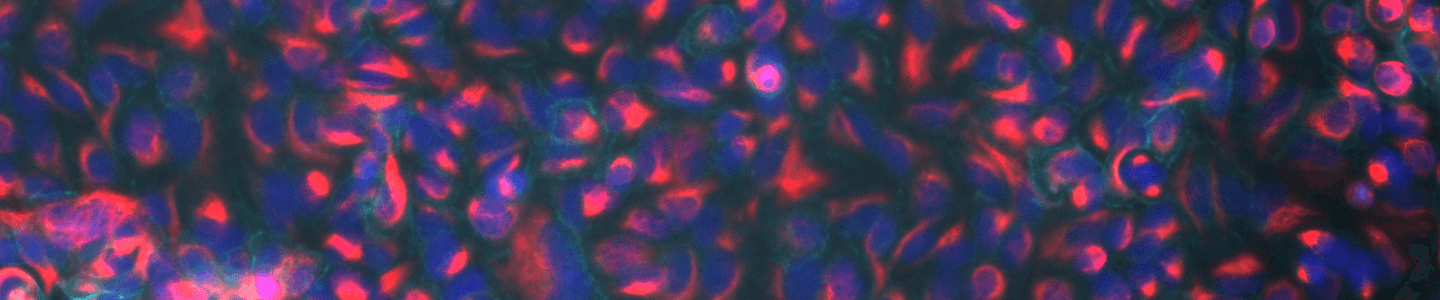
During the epithelial-mesenchymal transition (EMT) process, epithelial cells lose their apical-basal polarity and cell-cell adhesive properties and gain migratory and invasive properties, and therefore exhibit the characteristics of mesenchymal stem cells. In contrast, during the mesenchymal-epithelial transition (MET) process, mesenchymal cells lose their motility and show an increased number of cell-cell adhesions. The transition from an epithelial to mesenchymal cell phenotype (EMT) and its reverse mesenchymal-epithelial transition (MET) are essential for metastasis, wound healing and other normal, physiological, developmental processes.
To enable researchers to understand these processes, ATCC scientists created reporter cell lines that enable the real-time monitoring of EMT or MET. Available models include cells that express labeled EMT marker vimentin and MET marker E-cadherin.
Generation of a NSCLC EMT Reporter Cell Line for Metastatic Lung Cancer Drug Discovery and Development
Epithelial-mesenchymal transition (EMT) is a prominent biological process implicated in cancer metastasis. EMT has also been shown to have roles in many aspects of cancer initiation and progression, including tumorigenesis and drug resistance. Despite the accumulation of a large body of data on the association of EMT with cancer, EMT has not been an active target for therapeutic development partly due to the lack of appropriate in vitro models. Utilizing some of the basic biology of EMT, we have created an advanced in vitro model for use in both basic research and discovery of new anti-EMT drugs.
Learn more
