

EMT Reporter Cell Lines: Migrating to Better Models of Transition Webinar
January 27, 2022, at 12:00 PM ETAbstract
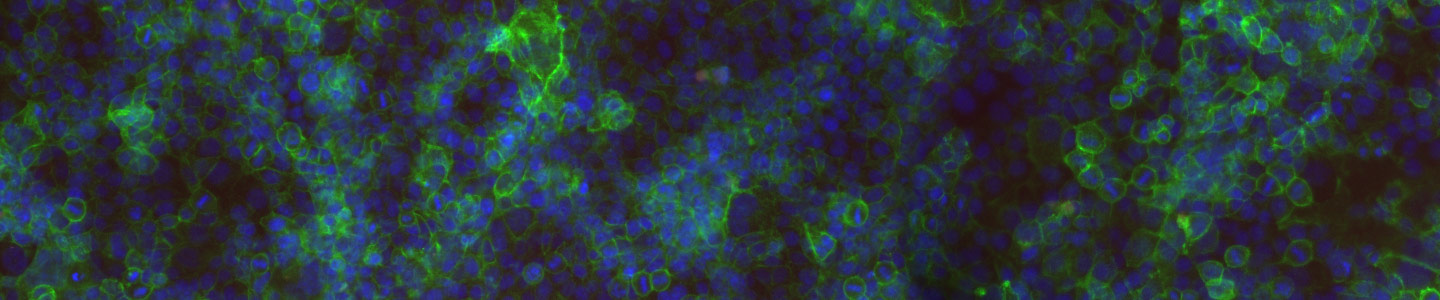
Epithelial-to-mesenchymal transition (EMT) and its reverse (MET) are physiological mechanisms implicated in tumor cell migration and invasion. To provide researchers with advanced biological models to study metastasis, ATCC scientists used CRISPR/Cas9 genome-editing technology to create a number of EMT and MET reporter cell lines. These reporter lines enable real-time monitoring of the transition of cells from epithelial to mesenchymal state (or the reverse) via the expression of red fluorescent protein (RFP)–tagged vimentin or green fluorescent protein (GFP)–tagged E-cadherin. In this webinar, ATCC experts will provide an overview of EMT/MET models derived from airway, colorectal, mammary, and pancreatic cell lines and highlight the extensive transition data that was generated in their development and validation.
Key Points
- ATCC scientists used CRISPR/Cas9 to engineer several EMT and MET reporter knock-in cell lines.
- The integrity of the VIM-RFP and ECAD-GFP knock-ins was verified at the genomic, mRNA, and protein level.
- In depth transition data were generated including morphology change, intrinsic reporter expression, marker expression, and invasion upon stimulation with EMT/MET agonists.
Presenter
Diana Douglas, BS
Lead Biologist, ATCC
Diana Douglas is a Lead Biologist at ATCC. For the last nine years, she has focused her research on the development of advanced biological models including the use of CRISPR/Cas9 gene-editing technology. Previously, Ms. Douglas worked at the Baker Institute for Animal Health at Cornell University and the Dalton Cardiovascular Research Center at the University of Missouri, where her research focused on the mechanisms of necrotic cell death in heart disease. Ms. Douglas attended Truman State University where she obtained a Bachelor of Science in Biology.
Sangeeta Kumari, MS
Senior Biologist, ATCC
Sangeeta Kumari is a Senior Biologist in the Research and Development department at ATCC. In the past several years, she optimized and employed the CRISPR/Cas9 genome-editing platform to generate new advanced cancer model cell lines for biopharma and basic research. Previously, Ms. Kumari worked at the Food Drug and Administration, National Institutes of Health, and University of Virginia. Throughout her research career, she has authored many scientific publications and made significant contributions in the areas of biomedical research. Ms. Kumari received her Master of Science in Bioinformatics degree from the University of Maryland and Bachelor of Arts in Biology degree from the University of Virginia.
