
Immune Signaling Reporter Cell Lines Enable Quantitative Monitoring of Crosstalk Among Cancer, Innate, and Adaptive Immune Cells in Tumor Microenvironment Model
American Association for Cancer Research® (AACR) Annual Meeting 2026
San Diego, California, United States
April 21, 2026Abstract
Background
T cell–targeted immunotherapies have led to major clinical gains, yet many patients fail to respond or develop resistance due to the immunosuppressive tumor microenvironment (TME). Increasing evidence shows that B cells and myeloid cells also influence antitumor immunity, but accessible models capable of capturing interactions among cancer cells and multiple immune cell types remain limited. To address this gap, we developed immune signaling reporter cell lines that allow real-time, quantitative monitoring of NFAT- and NF-κB–driven activation pathways. These models enable capturing dynamic interactions among multiple immune cell lineages and cancer cells relevant to immunotherapy response.
Methods
Six luciferase-based reporter lines derived from T cells, B cells, or myeloid cells were engineered with NFAT or NF-κB response elements driving luciferase expression. The models retain high endogenous expression of checkpoint receptors, including PD-1, TIGIT, and GITR in T cell reporters and SIRPα, Siglec-10, LILRB1, and B7-1 in myeloid reporters. Reporter activation was assessed following pathway-specific stimulation: PMA/ionomycin for NFAT and TNF-α or T cell–conditioned media for NF-κB. The B cell NF-κB reporter with elevated basal activity was further tested with an NF-κB inhibitor. In addition, all reporters were evaluated in co-culture with primary immune and cancer cells.
Results
Stimuli activating NFAT or NF-κB signaling produced strong, dose-dependent increases in luciferase activity, while pathway inhibition reduced signal as expected. Co-culture with primary immune and cancer cells generated diverse activation patterns, reflecting context-dependent signaling shaped by interactions within the TME.
Conclusions
These reporter cell lines provide a scalable platform for monitoring NFAT- and NF-κB–driven immune activation across T, B, and myeloid lineages. They support sensitive, reproducible evaluation of immune responses, enable mechanistic studies of dynamic immune cross-talk, and evaluation of combinatorial immunotherapy strategies within the TME.
Download the poster to explore the use of reporter cells for monitoring of NFAT and NF-κB signaling across immune lineages
DownloadPresenters
Hyeyoun Chang, PhD
Scientist, ATCC
Hyeyoun Chang, PhD, is a Scientist in the Immuno-oncology group of the R&D department at ATCC. She has extensive experience in the fields of biomedical engineering and cancer biology that focuses on drug delivery, intracellular signaling, and gene therapy. Prior to joining ATCC, Dr. Chang received her PhD in biomedical engineering from Korea University of Science and Technology and completed her postdoctoral training at Dana-Farber Cancer Institute/ Harvard Medical School.
John Foulke, MS
Lead Biologist, ATCC
John Foulke is a Lead Biologist in the Immuno-Oncology group in the R&D department at ATCC. John joined the ATCC cell biology R&D group in 2008, and he has led many projects centered on the development of novel cell lines and cell-based reporter systems to support cancer research community. His work is mainly focused on developing innovative cell models for research and drug discovery in the immuno-oncology field.
Explore our featured resources
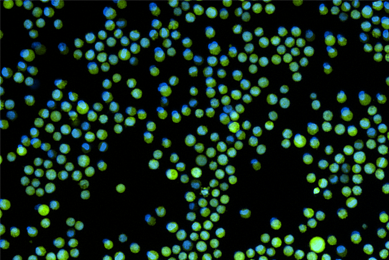
Reporter-labeled Cells
To save you time and the expense associated with the development of reporter-labeled cells, ATCC has incorporated expression vectors harboring fluorescence, luciferase, or β-galactosidase reporter genes into a variety of clinically relevant cell lines.
More
Immuno-oncology
To support immuno-oncology research, ATCC provides a large collection of fully characterized and authenticated cell lines, human primary cells, and advanced cell models.
More
Cancer Research
Fighting cancer requires painstaking research and development. Scientists need materials and standards for drug screening, tumor mechanisms, cancer immunology, and cancer diagnostics. ATCC has research models such as organoids, conditionally reprogrammed cells, luciferase expressing reporter cell lines, isogenic CRISPR/Cas9 genome-edited cell lines, and epithelial-mesenchymal transition reporter cell lines.
More