
Evaluation of Ex Vivo CAR-T Cell Cytotoxicity and Infiltration Using Multimodal 2-D and 3-D Imaging Approaches
American Association for Cancer Research® (AACR) Annual Meeting 2026
San Diego, California, United States
April 20, 2026Abstract
Background
Chimeric antigen receptor T (CAR-T) cell therapy has revolutionized cancer treatment, particularly for hematologic malignancies. Beyond CD19 and CD20, BCMA (B-cell maturation antigen) -targeted CAR-T therapies have become a major focus, especially for multiple myeloma. In fact, BCMA is considered one of the most validated targets in plasma cell malignancies. In pursuit of improving the efficacy and number of applications of this therapy, sensitive and robust cytotoxicity assays are required to efficiently evaluate different CAR-T constructs, effector-to-target cell ratios, and immune effector cells ex vivo. Furthermore, as CAR-T cell therapy is now under active investigation for the treatment of solid tumors, there is an urgent need for models that mimic the complexity of 3-D tumor environments.
Method and results
In this study, we engineered two luciferase-GFP dual reporter cancer cell lines, Raji-GFP-Luc2 and NCI-H929-GFP-Luc2, and demonstrated their use in a streamlined combined bioluminescence and live imaging assay. Notably, Raji-GFP-Luc2 and NCI-H929-GFP-Luc2 endogenously express high levels of the two FDA-approved CAR-T target antigens, CD19 and BCMA, respectively. Using these lines in co-culture with mock and targeting CAR-T cells, we tracked reporter cancer and CAR-T cell interactions by fluorescence live imaging. Fluorescence quantification clearly demonstrated that CAR-T cells killed cancer cells at higher levels compared to mock controls in both 2- and 3-D co-culture. We then evaluated dose-dependent cancer cell killing by targeting CAR-T cells in 2- and 3-D by luciferase assay. Importantly, we found that quantification of either transgene yields comparative results despite utilizing distinct assays and readouts. Finally, we embedded reporter cancer cell spheroids in 3-D matrices and performed time-lapse imaging of CAR-T cell infiltration. Bioluminescence assay of the embedded spheroids confirmed increased cancer cell killing by targeting CAR-T cells in a solid tumor model.
Conclusion
Overall, our dual reporter cancer cell lines are powerful and effective tools for assaying CAR-T cell cytotoxicity. Furthermore, our multimodal imaging platform integrates bioluminescence and live fluorescence imaging to quantitatively and visually assess CAR-T cell cytotoxicity. With scalability and sensitivity, this assay provides an avenue for standardizing CAR-T cytotoxicity testing and will aid in the expansion and improvement of this promising therapy.
Download the poster to explore the use of dual reporter cancer cell lines for assaying CAR-T cell cytotoxicity
DownloadPresenter
Catherine McManus, PhD
Scientist, Immuno-oncology, ATCC
Catherine McManus, PhD, is a Scientist in the Immuno-Oncology group in Cell Biology R&D at ATCC. Prior to joining ATCC, Dr. McManus received her PhD in Genetics from Yale University and completed her postdoctoral training at NIH. She has expertise in engineering reporter constructs for use in and ex vivo, identifying reporter construct integration sites, and assaying reporter expression.
Explore our featured resources
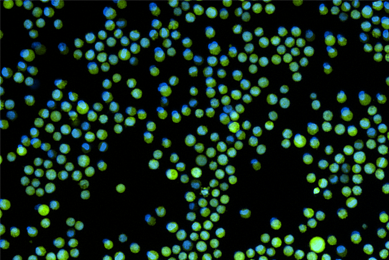
Reporter-labeled Cells
To save you time and the expense associated with the development of reporter-labeled cells, ATCC has incorporated expression vectors harboring fluorescence, luciferase, or β-galactosidase reporter genes into a variety of clinically relevant cell lines.
More
Cancer Research
Fighting cancer requires painstaking research and development. Scientists need materials and standards for drug screening, tumor mechanisms, cancer immunology, and cancer diagnostics. ATCC has research models such as organoids, conditionally reprogrammed cells, luciferase expressing reporter cell lines, isogenic CRISPR/Cas9 genome-edited cell lines, and epithelial-mesenchymal transition reporter cell lines.
More
Immuno-oncology
To support immuno-oncology research, ATCC provides a large collection of fully characterized and authenticated cell lines, human primary cells, and advanced cell models.
More