
A Controlled Framework for Modeling Temperature Excursions in Cryopreserved Cells
CRYO 2026
Seattle, Washington, United States
July 16, 2026Abstract
The shipping and handling of cryopreserved biological materials require strict temperature control to preserve post-thaw viability and performance. Despite standard packaging and shipping controls, vials can experience warming events during transit, receipt, or transfers between storage systems. Because these excursions are unpredictable and difficult to reproduce, it can be difficult to compare excursion severity across cell types or evaluate mitigation approaches under consistent conditions.
We developed a programmable workflow to model controlled temperature excursions using a benchtop controlled-rate freezer (Strex CytoSAVER, FZ-2100). Due to the platform’s practical lower temperature limit of -80°C, we designed an excursion framework to probe dry ice relevant warming events that can occur during shipment and handling. A structured temperature-duration matrix spanning -80°C, -60°C, -40°C, -20°C, 0°C, and +20°C with dwell times from minutes to hours (5, 15, 30, 60, 120, and 240 minutes) was implemented. Cryopreserved vials were exposed to defined excursion conditions, returned to baseline storage temperature, and thawed using a standardized procedure. Post-thaw viability and cell concentration were quantified using the Vi-CELL BLU Cell Viability Analyzer.
The system was applied across THP-1, A-549, HepG2, U937, and SH-SY5Y cells to generate viability response surfaces and compare shared versus cell-specific susceptibility patterns. Excursion impact increased with both deviation temperature and exposure time, but sensitivity differed markedly by model. For example, following a -20°C excursion lasting 2 hours, THP-1 and SH-SY5Y lost >50% viability, whereas A-549 showed ~2% loss under the same condition.
This controlled excursion modeling framework enables benchmarking of biological robustness to cold-chain deviations and provides a reproducible testbed for evaluating mitigation strategies. The same matrix-based approach can be extended to newer biological models to support scale-up and logistics decisions for broader, more consistent use.
Download the poster to explore a controlled excursion modeling framework for benchmarking cold-chain deviations
DownloadPresenter
Jacqueline Mikhaylov, BS
Biologist, Cryobiology R&D, ATCC
Jackie Mikhaylov started her scientific career with a BS in Microbiology from University of South Florida and quickly moved into a virology position following graduation. Her career continued to grow when she joined ATCC cryobiology, and she has been able to innovate and learn from her coworkers at a fast pace. She has learned multiple new skills, from HPLC to flow cytometry. She enjoys the opportunity to continue her growth within the friendly and intelligent space that ATCC provides.
Explore feature resources
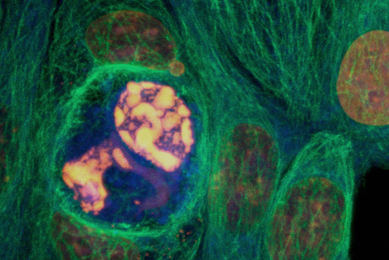
Cell Products
ATCC has an extensive collection of animal and human cell lines and models for basic research, assay development, drug discovery, and toxicology screening.
More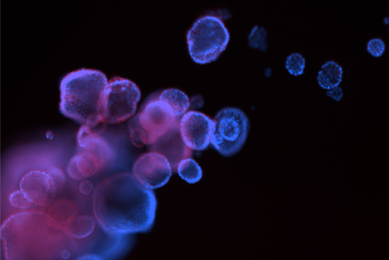
Cell Models
Cell models are widely used in toxicology, immunology, and cancer pharmacogenomic studies to predict clinical response and to identify novel mechanisms associated with variation in drug response.
More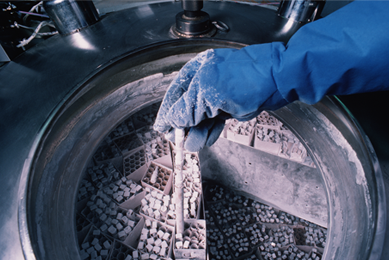
Cryopreservation Products for Cells
We offer recommended cryoprotectants and techniques to support cells so you experience maximum viability of cells in cell culture, including tools and a line of serum-free cryopreservation media to successfully cryopreserve cell cultures.
More