
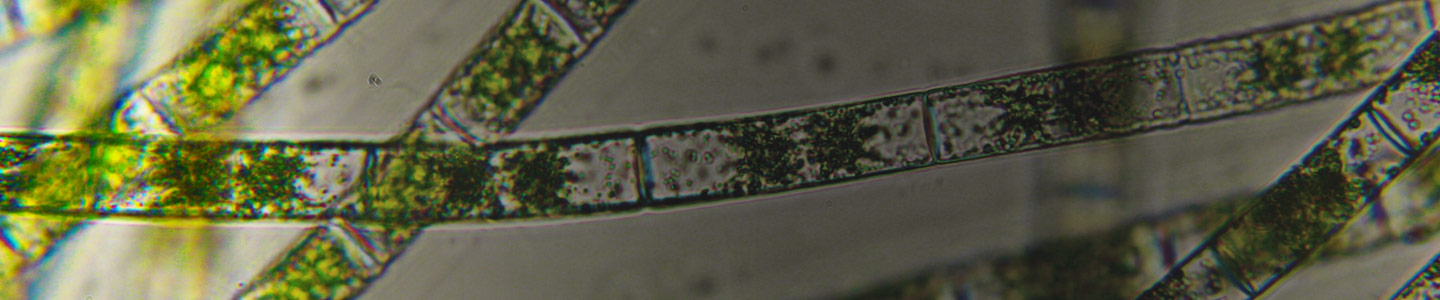
What do biofuel and yogurt have in common? They’re just a few of the many products that are made possible with algae. Considering the tremendous diversity of algae, it’s no wonder scientists have spent the past decades mining it as a rich source of research material.
Algae are a very large, diverse group of autotrophic protists that range in size from unicellular microalgae to large multicellular organisms. What’s alluring about the algal species is its use of chlorophyll and other pigments to manufacture its own food source through photosynthesis. The types of pigments used for photosynthesis differ among the algal divisions, resulting in colorful organisms that can appear green, red, brown, yellow, and golden-brown. Algae also differ in the type of carbohydrate compounds stored for energy and the type of flagella used for motility.
Research breakthroughs have led to different uses for algae, including as fertilizer, culture media, pen and printer ink, textile pigments, animal feed, thickeners in dairy products, and a means for pollution control. Perhaps the most well-known application is bioenergy. Here, the lipid portion of an algal biomass can be extracted and converted to biodiesel, and the carbohydrate content can be fermented into bioethanol and biobutanol. Algal-based biofuels provide a sustainable form of energy that requires less land and freshwater resources than traditional crop-based sources of bioenergy.
The potential applications for algae are numerous. ATCC supports these various research efforts by offering a diverse collection of high-quality, fully authenticated algal cultures. Our algae holdings include genera such as Chlamydomonas, Chlorella, and Euglena.
Explore our collection of algae cultures today to support your innovative research.

