
Across the United States, rich troves of biodiversity are hiding in plain sight.
The U.S. National Park System spans more than 85 million acres1 of diverse ecosystems, each home to organisms adapted to thrive under extreme and varied conditions. Among them are microorganisms that have already enabled breakthroughs in medicine, biotechnology, and industry. Yet the vast majority of this biodiversity remains unexplored.
For more than a century, ATCC has played a critical role in ensuring that biological materials like these are not lost to time. As one of the world’s leading biological resource centers, ATCC is focused on providing the scientific community with credible biological products, both physical materials and their digital counterparts, alongside advanced model systems and high-quality services that support everything from basic research to translational medicine and public health.
Today, we are defining what a next-generation bioresource center looks like by connecting authenticated biological materials with high-quality digital data in ways that enable reproducibility, traceability, and AI-driven discovery.
A living library in practice
The living library vision is already being realized in practice.
Through collaborations with the National Park Service, microbial specimens discovered in U.S. national parks are deposited into curated collections where they are authenticated, preserved, cataloged, and made available to scientists around the world. ATCC’s US National Park Service Special Collection includes more than 100 microbial strains, ranging from heat-loving thermophiles to acid-tolerant acidophiles, sourced from some of the most extreme environments in the country.
These organisms are more than research specimens. They are models for understanding microbial ecology and evolution, and they hold potential for applications in biotechnology and industry.
Increasingly, policymakers and scientists are recognizing that these natural assets are more than environmental treasures. Instead, they are strategic scientific and economic resources, with the potential to drive the next wave of innovation across medicine, agriculture, and industry.
Biological resource centers and beyond
This is where bioresource centers, which combine gold-standard reference materials and data, play a critical role. For decades, global bioresource centers, like those for which ATCC sets the industry standard, have served as the backbone of scientific progress, ensuring that biological materials collected in the field can be preserved, authenticated, and transformed into shared, enduring resources. They provide the foundation for reproducibility by maintaining validated cell lines and microbes, standardized reference materials and data, and the long-term stewardship required to make discoveries accessible to the broader scientific community.
Yet preservation alone is no longer sufficient. To fully realize the value of biodiversity, physical biological materials must be seamlessly connected to high-quality digital data. Enabling reproducible, AI-driven science depends on well-characterized, authenticated microbes paired with robust genomic data and metadata. That requires parallel investment in both the materials themselves and the data ecosystems that support them. This is an area of growing focus across the scientific community, and one where ATCC’s integrated capabilities position us to contribute meaningfully.
By co-locating biological materials with their genomic data within a standardized framework, scientists can ensure the traceability, consistency, and reproducibility needed to translate discovery into gold-standard science and sustained scientific and technological progress.
America’s Living Library Act: biodiversity as national infrastructure
Recognition of the importance of preserving and leveraging biodiversity is now taking shape in the form of newly proposed legislation. Introduced in March, the America's Living Library Act proposes a new way of thinking about biodiversity: not simply as something to protect, but as infrastructure to build on.
The legislation would establish a pilot program within the U.S. Geological Survey to systematically collect biological specimens from public lands, sequence their genomic data, and create a publicly accessible, AI-ready database. Drawing on recommendations from the National Security Commission on Emerging Biotechnology, the initiative aims to transform biodiversity into foundational datasets that can power advances in fields ranging from drug discovery to advanced materials.
However, building a living library is not as simple as collecting samples and sequencing DNA. Without the right infrastructure and focus on quality, standards, and traceability, even the most promising discoveries risk being lost, mischaracterized, or rendered unusable. Biodiversity only becomes a lasting scientific resource when it is preserved, validated, and made accessible in ways that enable reproducibility and collaboration.
Building the future of biodiversity discovery
The America’s Living Library Act reflects a growing consensus that biodiversity data is foundational to the future of the bioeconomy. But realizing that vision will require more than field collection or sequencing alone. It will demand a coordinated system that connects discovery to infrastructure, integrating field research, genomic science, advanced data platforms, and trusted biological repositories.
With the right foundation in place, America’s biodiversity can become a living library in the truest sense: a dynamic, accessible resource that fuels discovery across disciplines and sectors. By investing in both the preservation of biological materials and the data systems that bring them to life, we can unlock a new era of innovation. An era that is rooted not just in what we build, but in what we are able to understand, share, and sustain.
Did you know?
The ATCC Genome Portal is the only interactive platform offering authenticated, reference-grade microbial and cell line omics data directly traceable to ATCC’s trusted materials.
Meet the author
Rebecca Bradford, MBA, MS, PMP
Senior Vice President, Government Programs, ATCC Federal Solutions (AFS)
Rebecca is responsible for the AFS business growth strategy, improved program management, and corporate responsiveness to the government and research community needs. Rebecca manages a portfolio of programs with NIAID, CDC, and BARDA that provide products and services to help the government address emerging infectious diseases, pandemic response and preparedness, medical countermeasures, and global health security.
Explore our featured resources

US National Park Service Special Collection
The US National Park Service Special Collection offers scientists a diverse group of microbial specimens—including unique microorganisms known as extremophiles, which can be used in a variety of applications.
More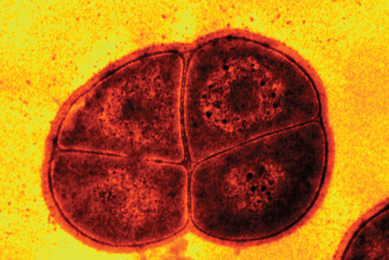
Extremophiles
Explore our wide selection of extremophiles isolated from a variety of environmental sources. Our growing portfolio includes thermophiles and hyperthermophiles, psychrophiles, acidophiles and alkaliphiles, and halophiles.
More
Discover the ATCC Genome Portal
The ATCC Genome Portal is a rapidly growing ISO 9001–compliant database of high-quality reference genomes from authenticated microbial strains in the ATCC collection. Through this cloud-based platform, you can easily access and download meticulously curated whole-genome sequences from your browser or our secure API. With high-quality, annotated data at your fingertips, you can confidently perform bioinformatics analyses and make insightful correlations.
MoreReferences
- National Park Service. Frequently asked questions. National Park Service website. https://www.nps.gov/aboutus/faqs.htm. Accessed March 27, 2026.
